Find the hidden demand: how to spot underserved customer segments in a crowded market
Where everyone else looks, look somewhere else
Every growing market eventually feels crowded. Competitors crowd the same keywords, chase the same buyer personas, and pitch the same features. Yet inside that noise, pockets of demand stay under-served - not because the customers are hard to reach, but because the usual ways of looking miss them. Finding those pockets is what separates a business that fights for scraps from one that grows with purpose. The process is methodical, not magical, and it starts with rethinking who you treat as a customer.
Customer acquisition software, used well, can surface these gaps faster than manual research alone. But the software is only as good as the questions you ask it. This article walks through the steps to identify underserved segments in a market that seems full, what to watch at each stage, and how to turn those insights into a real growth path.
Step 1: Map the obvious segments first
Before you can spot what is missing, you need a clear picture of what everyone else already targets. Start by listing the main customer groups your competitors talk to openly. Look at their landing pages, case studies, blog topics, and social media content. Which job titles do they mention? Which company sizes, industries, or geographic regions appear again and again?
This mapping is not about copying. It is about recognising the zones where marketing spend is heaviest and competition fiercest. Once you see the dense areas, the empty spaces become visible by contrast.
Watch out for confirmation bias. It is easy to assume your own ideal customer profile matches the market majority. If your product has a clear strength in a niche that competitors ignore, that niche may feel like an outlier rather than an opportunity. Keep the map neutral - list what is, not what you wish were true.
Step 2: Layer in demand signals that competitors overlook
Market demand is not a single number. It is a pattern made up of search volume, content engagement, forum questions, review complaints, and support tickets. Competitors usually chase the highest-volume signals because those feel safest. Lower-volume signals, however, often point to segments with specific, unmet needs.

Look for clusters of repeated questions that no single solution addresses well. For example, a common complaint in product reviews for a category might be "this works for large teams but is too complex for a two-person operation." That complaint signals a segment - small teams - that existing vendors serve poorly. The demand exists, but the fit does not.
Tools that track competitor activity and surface market gaps can help here. A platform like webrankdigital.com, which combines market intelligence with lead tracking, lets you compare where competitors invest their resources against where customer intent is actually rising. The gap between the two is where underserved segments live.
Watch for the difference between stated preferences and revealed preferences. What people say they want in a survey often differs from what they actually click, buy, or recommend. Behavioural data - search patterns, trial signups, repeat visits - is more reliable than opinion.
Step 3: Split segments by intent, not just demographics
Demographic slices (age, location, industry) are too blunt. Two companies in the same city and same sector can have completely different purchase intent because one is scaling fast and the other is replacing a legacy system. Intent-based segmentation groups people by what they are trying to accomplish and how urgently they need a solution.
Common intent signals include:
- Urgency cues: searches for "best X for Y" combined with "this month" or "quick implementation"
- Specificity: queries that mention a particular pain point, not just a general category
- Comparison activity: pages that compare multiple vendors side by side
- Location modifiers: "near me" or city-specific terms that suggest local search behaviour
Each signal points to a different kind of intent. Someone searching for "affordable CRM for freelance consultants" has a different need from someone searching for "enterprise CRM with multi-location reporting." Both are valid segments, but the first is likely underserved if most CRM vendors target teams of ten or more.
Watch for false negatives. A segment with low overall search volume might still contain high-purchase-intent customers. A handful of very specific queries can represent real revenue if no one else is answering them well.
Step 4: Score opportunities by fit and reachability
Not every gap is worth filling. Some underserved segments are small, hard to reach, or too expensive to serve relative to the revenue they bring. Opportunity scoring helps you rank segments by two dimensions: how well your existing product or service fits their need, and how efficiently you can reach them through channels you already own.

A simple scoring approach uses three questions:
- Does the segment have a clear, recurring problem that your product solves better than alternatives?
- Can you reach them through organic search, referrals, or partnerships without massive ad spend?
- Is their purchase cycle short enough to generate cash flow within a reasonable timeframe?
Segments that score high on all three are worth pursuing immediately. Those that score high on fit but low on reachability may need a different channel strategy, such as content marketing aimed at long-tail keywords or partnerships with complementary services.
Watch for the trap of over-customisation. Serving a tiny segment so specifically that your product becomes irrelevant to anyone else can limit growth. The best underserved segments are those where a small tweak in messaging or packaging unlocks a group that otherwise would not consider you - not those that require a completely separate product line.
Step 5: Test with minimal commitment before full investment
Once you have a shortlist of promising segments, test demand before building dedicated funnels. Use landing pages, targeted ads, or personalised outreach to a small sample. Measure click-through rates, conversion to lead, and cost per lead. If the numbers work at small scale, the segment is real.
Automated funnels, such as those supported by customer acquisition software, let you run these tests without custom development for every segment. Set up a variant that speaks directly to the underserved group's language and pain point, then compare it against your general page. The difference in response tells you whether the segment responds to a tailored message or is better served by your main offer.
Watch for the early adopter bias. The first people who respond to a new message may be unusually motivated and not representative of the broader segment. Let the test run long enough to see repeat patterns, and look for organic sharing or repeat visits that signal genuine resonance.
Step 6: Build a feedback loop from the new segment
Once you start acquiring customers from an underserved segment, treat their feedback as a strategic asset. They chose you partly because other vendors ignored them. That means they have thought deeply about what they need and what frustrates them. Their input can reveal further sub-segments or adjacent needs you had not considered.
Set up a simple process to capture recurring themes from support tickets, sales calls, and product reviews. Over time, these themes become a map of evolving market demand. Competitors who stay focused on the mainstream will miss these shifts until it is too late.
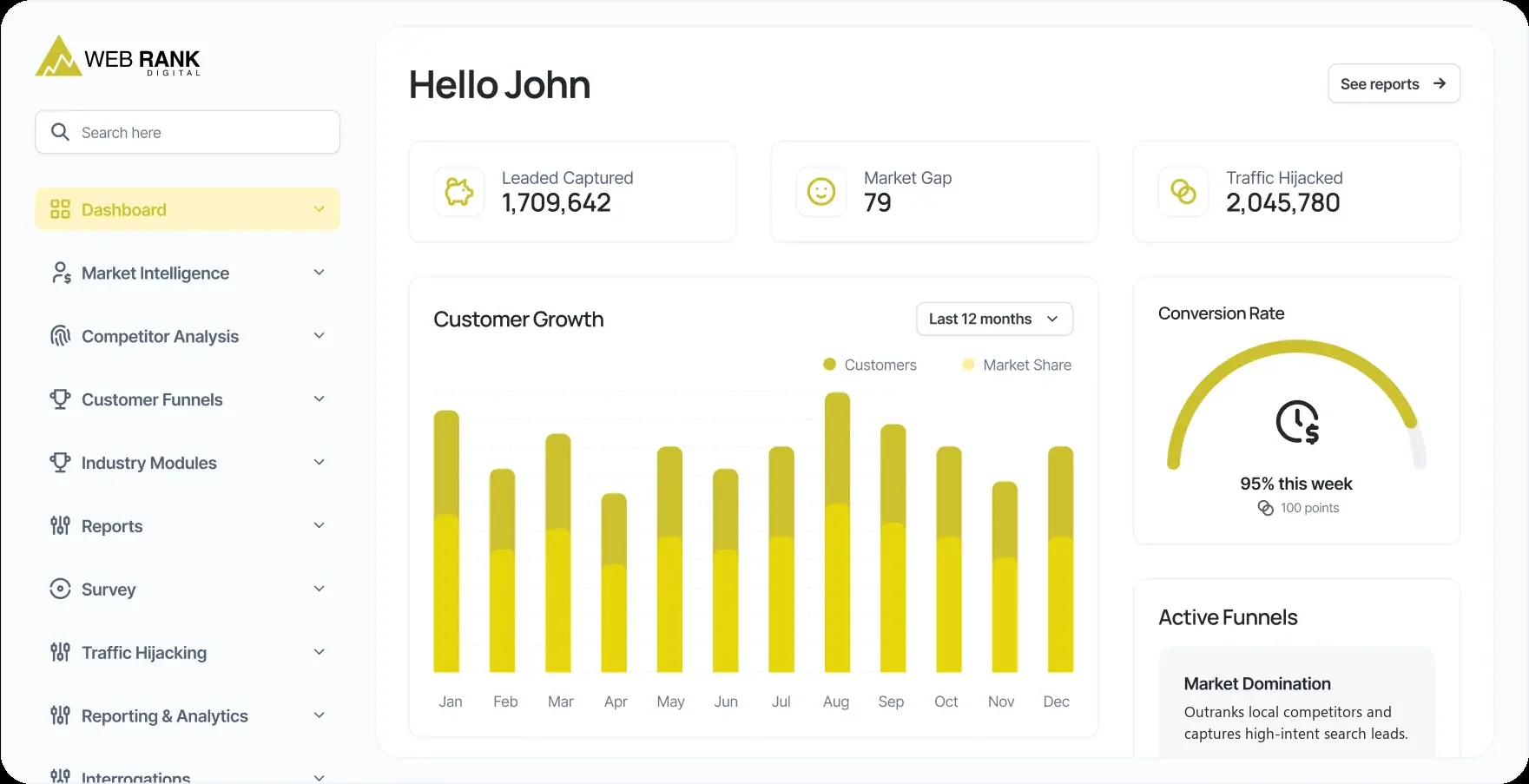
Tools that centralise lead tracking and competitor activity, like webrankdigital.com, can also show you how the new segment behaves over time: whether their intent changes, whether they expand their search to other categories, and whether competitors eventually start targeting them. This intelligence lets you stay ahead of the curve rather than reacting after the gap closes.
The real edge is seeing what others treat as invisible
In a crowded market, the easy segments are already fought over. The growth lies in the spaces that look too small, too specific, or too inconvenient for the mainstream. By mapping the obvious, layering in overlooked demand signals, segmenting by intent, scoring for realistic opportunity, testing lean, and listening hard to early customers, you can turn hidden demand into a reliable acquisition channel.
The tools exist to do this at scale. The harder part is the discipline to look where no one else is looking. That discipline, more than any piece of software, is what separates businesses that keep finding room to grow from those that stall when the market feels full.
Ends · CONVERSIONCORNER